Guides
AI videos of people who have died: what to know
Animated old photos, “messages” from loved ones and late leaders who speak again: when these AI videos comfort, when they mislead, and how to tell what's real.
Video Verifier team · · 5 min read
AI can now take a photo of someone who has died and make them smile, blink, turn their head or even speak in a voice that sounds like theirs. For many families this is a comfort. It also raises questions of consent, and it can be used to mislead or to take money from people who are grieving. Here's what these videos are, how to recognise them, and how to use them with care.
The kinds you'll come across
Animated family photos. Photo-animation features have been around for years. When the genealogy company MyHeritage launched its Deep Nostalgia feature in February 2021, it said the tool animated the faces in still photos using pre-recorded real movements. Today many apps do the same, often with more movement and sound.
"Messages" from a loved one. A video in which a parent or grandparent who has died appears to speak, made for a wedding, an anniversary or a memorial. The words are written by the family and spoken by a cloned or generated voice.
Public figures who speak again. In India, the late Tamil Nadu chief minister M. Karunanidhi has appeared in AI-made videos at public events, praising party leaders and workers, as Al Jazeera reported in 2024. Late film stars and singers appear in new scenes too.
Chat and video "griefbots". Services that let people talk to a simulation of someone who has died, built from their messages, photos and recordings.
Comfort is a real reason
There's nothing wrong with wanting to see a parent smile again, or with playing a grandmother's animated photo at a family function. Many people find it moving. If you make one, a few habits keep it kind:
- Ask close family first. Not everyone grieves the same way. One sibling's comfort can be another's distress.
- Say clearly that it's AI-made when you share it, especially with elders and children who may not realise.
- Keep it private if it's meant for family. A memorial video posted publicly can be copied, re-edited and used by strangers.
- Don't put words in their mouth that they wouldn't have said. A message of love is one thing; a video in which they "approve" of a decision they never knew about is another.
Consent: the person can't say yes
The person in the video can't agree to it. For family memories, close relatives usually decide together. For public figures, it gets harder: a late leader "endorsing" a party or a cause today is a claim they can't confirm or deny.
Researchers have started to look at this. In 2024, a team at the University of Cambridge called for safeguards on AI simulations of the dead, including respect for the wishes of the person recreated and of the people who'll interact with them, and ways to stop or retire such simulations.
Where it goes wrong
- Misleading the public. A late leader or star shown saying something new can be taken as real, especially when the clip is cut and forwarded without context.
- "Still alive" hoaxes. Clips claiming someone who died has been seen recently, or has "sent a message", can cause real pain to families.
- Money. Be wary of anyone who offers a video "message" from a loved one and then pushes for more payments, and of fundraising appeals that use an AI clip of someone who died. Give only through people and organisations you can verify.
- Voice clones of the living. The same tools that make a late grandfather speak can clone a living relative's voice for a scam call. Our guide to voice cloning scams explains the warning signs.
How to tell an animated photo from real footage
Many of these videos start from one still photo, and that leaves marks.
- Only the face moves. Shoulders, clothes and hair stay oddly still while the head nods and the eyes blink.
- The background is frozen. In real video, leaves move, light changes and people pass. In an animated photo, the background often stays exactly as it was in the picture.
- Head turns are small. The face can tilt and turn a little, but rarely shows a side it didn't show in the photo. When it does, features can stretch or blur.
- Old photo grain doesn't move right. Scratches, grain and blur from an old print may stay fixed on the screen while the face moves underneath them.
- The voice is too clean. A cloned voice may sound like them but with none of the room, breath or age you'd expect, and with phrases they never used. Our AI voice detector page explains what our voice check listens for.
Mixed videos: real footage plus AI
Memorial videos can combine real clips and photos with an AI-made section, so a single "real or AI" answer can be too simple.
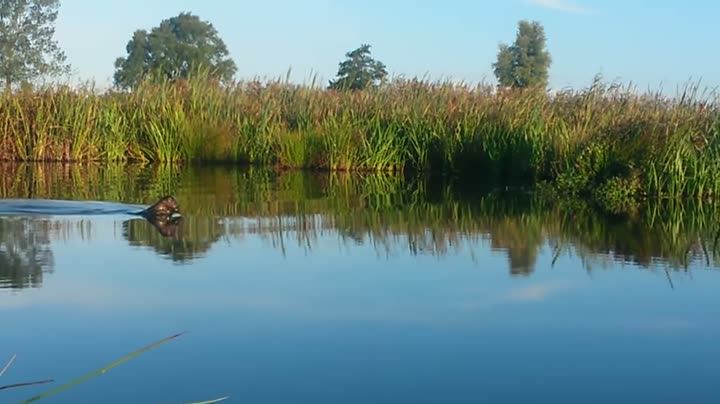
Video is likely
Real
Above: a real video of a calm lake with reeds, from Wikimedia Commons (credited on the card). Our video model read it as 99% real. Real, quiet footage like this can be the backdrop in a memorial video; the question is whether the person shown in it was filmed or added by AI. A Deep Scan checks every second of picture and the whole soundtrack and breaks the result down into real, real plus AI, and fully AI, so you can see which parts look AI-made. Our guide to Quick Scan and Deep Scan explains the difference.
If someone made one without your family's consent
If a video of your late relative is being used to mislead or cheat people, report it on the platform where it appears. If money or threats are involved, report it at cybercrime.gov.in or call 1930 in India. Our guide on what to do about a deepfake walks through saving evidence and reporting.
Checking a clip
If you're unsure whether a video of someone who has died is old footage or AI-made, upload it or paste the link on the home page. A Quick Scan is free, needs no sign-up and answers in under a minute for most videos, with the reasons behind the answer. It will say "most likely AI-generated", "most likely real", or "not conclusive" when the evidence is mixed.