Guides
Viral animal videos: real or AI?
Cute rescues, unlikely friendships, wild animals at the door: how to tell a real animal video from an AI one by its behaviour, bodies, camera and account.
Video Verifier team · · 5 min read
A growing number of viral animal videos are AI-made, and they're some of the hardest to judge because there's no face you know and no event to look up. The quickest checks are behaviour (does the animal act like its species?), bodies (legs, tails and fur when animals overlap) and the account that posted it. When those leave you unsure, a scan helps.
Why animal clips are perfect AI bait
Animal videos are shared without a second thought. Nobody fact-checks a puppy. There's no politician to verify, no news event to search, and the emotion does the work: a dog saving a child, a lion hugging its old keeper, a deer asking a stranger for help.
That makes them ideal for pages that collect followers fast. A page can post dozens of AI clips a day, build a huge audience, and later use it to sell products, push links or ask for "donations". The clip you're watching may be the harmless first step of that.
A clip that fooled many people
In July 2025, a clip that looked like night-time home security footage showed a group of rabbits bouncing on a backyard trampoline. It spread on TikTok and beyond, and some viewers said it was the first AI video that had ever fooled them. Fact-checkers at Lead Stories found it was AI-generated: a few seconds in, one rabbit merges into the one next to it, and another changes shape near the end. Copies followed with dogs, bears and other animals.
Two lessons from it. The grainy "security camera" look hides the small errors AI makes, and the giveaways lasted only moments. Watch animal clips more than once.
Check the behaviour: does it act like that animal?
You don't need to be a vet. Ask simple questions.
- Would these animals be together? Predators cuddling prey, wild animals relaxed in a crowd of people, or an animal far from where it lives (a kangaroo in an Indian village lane) should make you pause.
- Is the reaction right? Real animals startle, sniff, hesitate and get distracted. AI animals often perform: they look at the camera at the perfect moment, hug on cue, or "cry".
- Is it too heroic? Dogs dragging children out of rivers, cats stopping burglars, elephants rescuing cars. Some real rescue videos exist, but the more cinematic the rescue, the more you should check.
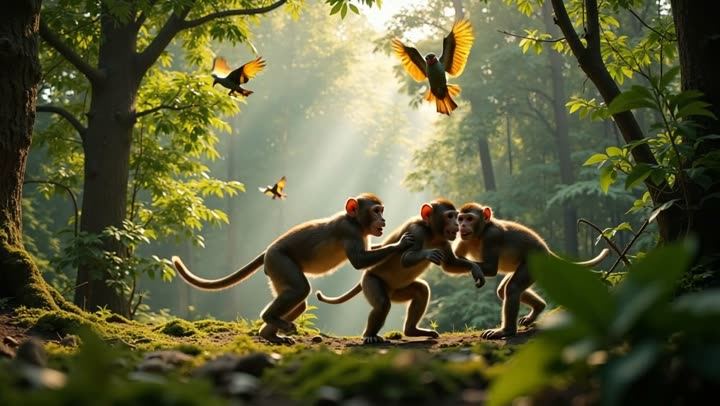
Video is likely
AI-made
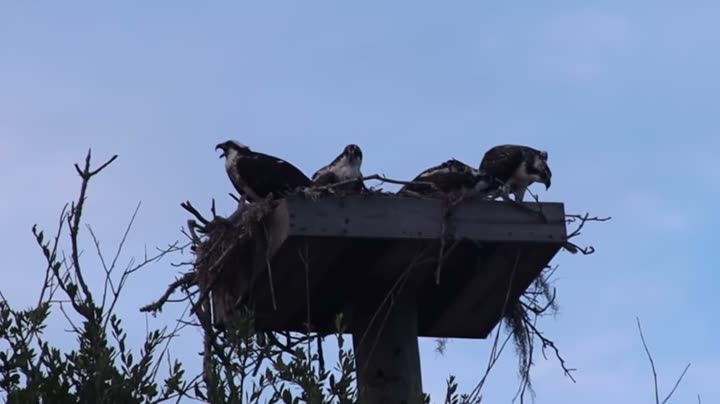
Video is likely
Real
First card: a PixVerse clip of monkeys and birds in a sunlit jungle, from our test set; our video model scored it 99% AI. Second card: a real video of ospreys on a nest platform, by a Wikimedia Commons contributor (credited on the card); our model read it as 99% real. The AI scene is lush and perfectly lit; the real one is ordinary. "Too beautiful" isn't proof on its own, but it is a reason to look closer.
Check the bodies: count, follow, pause
AI models learn what animals look like, not how their bodies work. Errors show up most when animals move fast or overlap.
- Count legs, ears and tails whenever two animals touch. Bodies can merge, and a leg can belong to nobody.
- Follow the feet. Paws and hooves may slide across the ground instead of stepping, or bend the wrong way.
- Watch fur and feathers at the edges. Where an animal meets the background, fur can smear into grass or flicker.
- Follow markings. A spot, a stripe or a collar should stay the same for the whole clip. On AI animals, patterns can shift or swap sides.
- Look at water and dust. Splashes that hang in the air or ripples that don't spread out from the animal are common tells.
Our guide to what AI video generators still get wrong covers these errors in more depth.
Check the camera
- "CCTV" and night vision. Grainy, black-and-white or green footage hides errors and makes us expect poor quality. Ask why a doorbell camera happened to be pointing at exactly the right spot, and whether the timestamp ticks along normally.
- Perfect framing. Real wildlife and pet videos are often shaky, zoom in late and lose the subject. AI clips frame the action perfectly from the first second.
- Clip length. Many AI tools make clips of a few seconds. A viral animal video that's a series of very short, beautifully framed shots deserves a closer look.
Check the account
On Instagram or Facebook, tap the profile before you share.
- Does it post one animal "miracle" after another, every day, from different countries?
- Are there no locations, no names for the animals and no follow-up videos?
- Did the page recently change its name or topic?
- Do the comments include people saying "AI"?
A real pet owner or wildlife photographer usually has a history: the same dog over months, the same reserve, behind-the-scenes posts. A clip farm has none of that. Some rescue videos are real but staged with real animals, which is a different problem; our guide on fake rescue videos covers it.
Run the clip through a checker
If a clip still looks convincing, paste its link on our Facebook video checker or Instagram checker, or upload the saved file on the home page. A Quick Scan is free, needs no sign-up and answers in under a minute for most videos. It runs our own video model, which follows how the picture moves over time, plus a frame check and visible AI watermark reading, and shows the reasons behind the answer. Results say "most likely AI-generated", "most likely real" or "not conclusive"; no checker is certain.
Want to test your own eye first? Try the Real or AI quiz with clips from our test set.
Quick answers
Are all viral animal videos fake?
No. Plenty are real, filmed by pet owners and wildlife watchers. The point is to check the ones that seem too perfect before you share them.
Why do AI animal videos often look like security footage?
Low-quality, night-time or black-and-white footage hides the small mistakes AI makes and lowers our expectations, so errors are easier to miss.
What's the single best check?
Watch it twice, slowly, and follow one animal's legs and markings from start to end. If they change, be suspicious.