How it works
Can ChatGPT, Gemini or Grok tell if a video is AI?
People ask chatbots 'is this video AI?'. What ChatGPT, Gemini and Grok can actually check, why their answers can change, and when Gemini's SynthID check is genuinely useful.
Video Verifier team · · 3 min read
Have a video to check right now? Run a free check on crackly-ai.com →
Mostly no. General chatbots like ChatGPT and Grok aren't AI video detectors: they describe what they see and write a plausible answer, and they can give different verdicts on the same clip. There's one real exception. Google's Gemini can check a video for SynthID, the invisible watermark Google puts in videos made with its own AI tools, so it can confirm "made with Google AI". It can't tell you anything about videos from Sora, Kling, Grok Imagine or other tools.
What a chatbot does with your video
When you upload a video or a screenshot and ask "is this AI?", a general chatbot typically:
- looks at some frames and describes them,
- notices obvious things like a visible watermark, garbled text or an extra finger,
- and writes an answer that sounds confident either way.
What it doesn't do is run a tested forensic model trained to tell real footage from AI footage, or measure how the picture changes over time. Its "verdict" is an opinion, and the same clip can get a different answer if you ask again. Testers have shown exactly that with Grok's replies on X (AI or Not).
The exception: Gemini and SynthID
Google's Gemini app can check an uploaded video for SynthID, Google's invisible watermark. If you ask "Was this made with Google AI?", it looks for the mark in the picture and the sound (Google's help page lists limits, such as files up to 100 MB and under 90 seconds). That's a real, built-for-purpose check, but a narrow one:
- SynthID found: strong evidence a Google tool such as Veo made or edited it.
- Not found: only means "not Google". It's not evidence the video is real.
Our SynthID detector guide explains the website and the Gemini check step by step.
"@grok is this real?"
On X, many people tag Grok under viral videos. Treat the reply as you'd treat a stranger's comment: sometimes helpful, sometimes wrong, never proof. X's Community Notes, written and rated by people, are often more useful when they appear.
Video is likely
AI-made
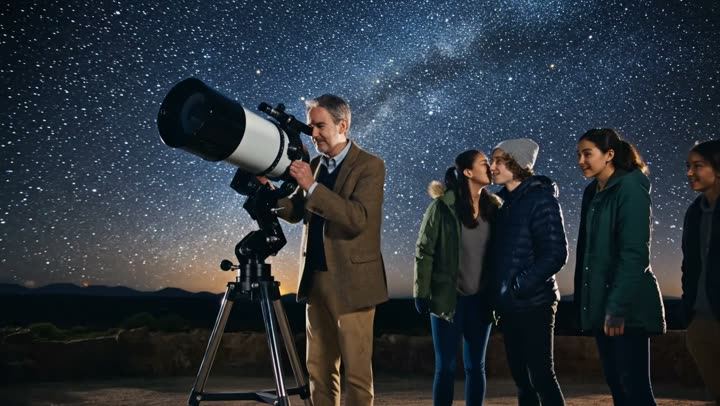
Above: people gathered around a telescope under the Milky Way, from a clip made with Google Veo 3. A chatbot looking at a frame like this has little to go on; a SynthID check on the original file, or a detector that reads the motion, has much more. Our video model scored it 99% AI.
What actually works
- A purpose-built detector. Tools trained and tested on real and AI video, that show their reasons and their accuracy. Ours publishes its results on our accuracy page.
- Provenance checks. SynthID for Google tools, Content Credentials for tools that attach them, visible watermarks.
- Source checks. Who posted it first, whether reliable outlets report the event, and whether a fact-check exists.
Quick answers
Can ChatGPT detect AI videos?
Not reliably. It can describe frames and spot obvious clues, but it isn't a tested AI video detector, and its answers can vary.
Can Gemini tell if a video is AI?
It can tell whether a video carries Google's SynthID watermark, so it can confirm videos made with Google AI. A negative result doesn't mean the video is real.
Is asking Grok "is this real?" reliable?
No. Grok's replies are chatbot answers, not forensic checks, and they have contradicted each other on the same clip.
Use a tool built for the job
Paste the link or upload the video on crackly-ai.com. A Quick Scan is free to try and shows which checks pointed which way, instead of just a yes or no.