Scams and safety
AI pranks: the 'homeless man' trend and why police warn against them
AI pranks like the 'homeless man in the house' trend sent real 911 calls. What happened, why AI pranks can backfire, how to tell a prank image or video, and what to say to kids.
Video Verifier team · · 3 min read
Have a video to check right now? Run a free check on crackly-ai.com →
AI pranks use realistic AI images or videos to convince someone something alarming is happening, most famously the October 2025 "AI homeless man prank", in which teenagers sent parents AI pictures of a stranger in their home. Police in several US states and the UK warned against it after receiving real emergency calls. If you get a frightening picture or clip from someone close to you, call them before you call anyone else, and look for the AI tells.
What happened with the "homeless man" prank
In October 2025 a trend spread on TikTok and other apps: people used AI image tools to create realistic photos of a stranger sitting on their couch, eating in their kitchen or lying in their bed, then texted them to parents or roommates and filmed the reaction. Police departments, including in Salem, Massachusetts and Round Rock, Texas, said the prank led to real 911 calls, and officers in Poole, England responded to a similar call (NBC News, WBAY).
Police called it dangerous: a frightened parent might rush home or confront someone, officers arrive expecting an intruder, and emergency resources are tied up. Salem police also said the prank dehumanises homeless people. Some departments warned it could lead to charges for false reports.
Why AI pranks are different from old pranks
- They look like evidence. A realistic photo of your own living room is far more convincing than a made-up story.
- They spread beyond the joke. A prank video posted for views can be reshared as a real event.
- They train people to doubt real emergencies. The next real message might be dismissed as "another AI prank".
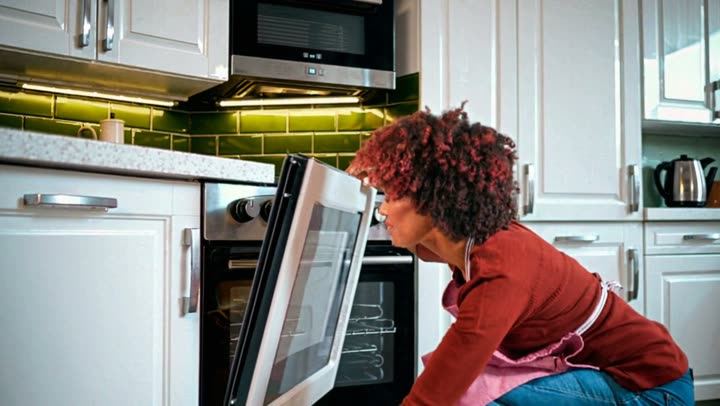
Video is likely
AI-made
Above: a woman crouching to look into an oven in a bright kitchen, from a clip made with OpenAI's Sora. Everyday home scenes like this are exactly what AI tools make convincingly, which is what made the prank work. Our video model scored it 99% AI.
How to tell a prank image or video
- Call the sender. A real emergency survives a quick phone call. A prank usually ends with laughter.
- Look at the details of your own home. AI gets your room "almost" right: wrong furniture, wrong pictures on the wall, odd light, a door in the wrong place.
- Look at the person. Hands merging with objects, faces that change between photos, clothes that blend into the furniture.
- Ask for a second angle or a live video. A prankster can generate another picture, but a live call walking through the room is much harder to fake.
- For videos, scan them. A detector won't be certain, but it shows what it found.
Talking to children and teens
Explain that the trend caused real 911 calls and that a "harmless" prank can send police to their home expecting an intruder. Agree that frightening messages get a phone call first. Our guide to talking to kids about AI videos has more ideas.
Quick answers
What is the AI homeless man prank?
A 2025 social media trend where people sent family members AI-generated images of a stranger inside their home and recorded the reaction. Police warned it caused real emergency calls.
Is the AI homeless man prank illegal?
Making the picture isn't, but causing a false emergency call can be. Several police departments warned that pranks leading to 911 or 999 calls could bring charges.
How do I know if a picture of my house is AI?
Look for details that don't match your real home, call the sender, and ask for a live video call through the room.
Check a video that worries you
Upload the clip or paste its link on crackly-ai.com. A Quick Scan is free to try and shows the reasons behind its answer.